 3 months ago
71
3 months ago
71
36 minutes ago
Lynette HorsburghNorth West

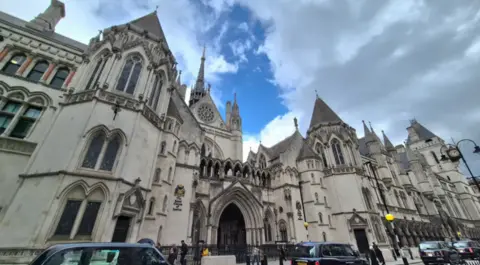 BBC
BBC
Mr Justice Pushpinder Saini found the Foreign Office was "uniquely well placed to assess whether sanctions decisions would achieve their intended purpose"
A former Everton Football Club director has lost his High Court challenge against the Foreign Office's decision to continue sanctions against him due to his billionaire uncle's ties with Russian President Vladimir Putin.
Sarvar Ismailov and his brother Sanjar were sanctioned in 2022 after Russia's invasion of Ukraine due to them being nephews of Uzbek-Russian oligarch Alisher Usmanov.
Sarvar Ismailov asked ministers to review the decision in 2023 and while the wording of the designation under sanction laws was amended in 2024, he remained sanctioned.
His lawyers told a hearing earlier this month it was "outrageously unfair" that he was being sanctioned "simply for being his uncle's nephew".
The Foreign Office defended the claim, however, with its barristers telling the court in London that sanctioning people based on familial relations "serves several rational and legitimate purposes".
Mr Justice Pushpinder Saini dismissed Ismailov's claim, finding the Foreign Office was "uniquely well-placed to assess whether sanctions decisions would achieve their intended purpose" and that the decision was not "irrational".
The judge also accepted in his 46-page ruling that it was "reasonable to assume" that Ismailov could "exert pressure" on his uncle and the decision to continue sanctioning him was "plainly connected" with the objectives of the sanctions scheme, including showing there were "negative consequences" to associating with those with ties to Russia.
He said: "The question is not whether the claimant's designation will of itself bring the conflict to an end.
"Rather, the question is whether the measure is capable of contributing to the stated objective as part of the overall sanctions regime. The decision to maintain the designation of the claimant is so capable."
He continued: "The claimant's designation, and others like him who are 'associated with' [Mr Usmanov], makes an important contribution to the overall cumulative impact of sanctions and enhances pressure on Russia in respect of its actions in Ukraine."
His barrister, Hugo Keith KC, said in written submissions earlier this month that Ismailov moved to the UK aged 13 and had never lived in Russia as an adult, had no political profile or connections in the country, and had no relationship or access to Putin or anyone else in the Russian government.
He also said there was no evidence that Ismailov had ever supported the Russian government or the war in Ukraine, telling the court there was an "utter purposelessness" of sanctioning his client and the decision was "plainly irrational" and "capricious".
Jason Pobjoy KC, for the Foreign Office, said in written submissions the decision to maintain sanctions against Ismailov was open to the department, despite the "significant impact" on him, as it "furthers the overarching purpose of the sanctions regime".
He also said the Foreign Office had a "broad margin of discretion" in sanction decisions, and that there was "no tenable basis" to say that the decision was unlawful.