 3 months ago
87
3 months ago
87
ByAlex Bysouth
BBC Sport senior journalist
It was a grin that beamed "GOALS". Even disguised as a clown, the iconic gap-toothed smile of a teenage Ronaldo was enough to reveal him to the other Maastricht carnival-revellers. At 18, he was already an unmistakable star.
The Brazilian was scoring at an astonishing rate down the road in Eindhoven, a heady mix of swashbuckling stepovers and dazzling dribbles complemented by the coldest of finishes for PSV earning him world-record moves to Barcelona and then Inter before he hit 21.
As the youngest recipient of the Ballon d'Or and with more than 200 goals for club and country by the turn of the millennium, a 23-year-old Ronaldo looked set to dominate the sport - were it not for his kneecap "exploding" in April 2000, there would be no need for this debate.
Yet, while R9 was by no means finished, his injuries opened the door for others to stake their claim - so who is the greatest centre-forward of the 21st Century?
Whittling it down to 10 contenders is no easy feat - you can have your say below.
Goals, obviously, are a good place to start. Olivier Giroud may have led France to 2018 World Cup glory without one but that is not sustainable for a number nine.
You cannot, though, identify a centre-forward by scoring charts alone.
Lionel Messi won six Golden Shoes - awarded to Europe's top goalscorer - more than anyone in history. Erling Haaland is the only player to boast a better goals-per-game ratio in Europe's top five leagues this century than the Argentine.
But can Messi really be considered a centre-forward? The guy that made 'false nine' fashionable operates in a different realm to a traditional frontman.
Neymar falls into a similar category. Francesco Totti won a Golden Shoe and Serie A's Capocannoniere, but was a renowned playmaker in carmine Roma red. Raul's threat came alongside a plethora of Real Madrid number nines, Ronaldo, Ruud van Nistelrooy, Gonzalo Higuain...
Instead, Luis Suarez from Barcelona's iconic MSN frontline makes it. After following his childhood sweetheart to Europe, he established himself as a prolific goalscorer showcasing a bit of everything at Ajax and Liverpool.
The Uruguayan then netted 195 times in 283 games to win the lot with the Catalan giants before his grit, guile and ability to conjure goals from nowhere proved an idyllic match for Atletico Madrid, as Suarez fired them to the title.
Erling Haaland thunders his way into our top 10 as the definition of a traditional centre-forward. Tall, strong, powerful - those qualities alone don't qualify you (sorry Jan Koller, Nikola Zigic et al), but a faster hit rate than anyone in Champions League history does.
Via Manchester City, Borussia Dortmund and Red Bull Salzburg, the 25-year-old has registered a goal a game in Europe's elite competition - only Gerd Muller (34 in 35 for Bayern Munich) comes anywhere close to Haaland's 56 in 56.
The staggering figures churned out by Messi and Cristiano Ronaldo during a peak Clasico era skewed expectations - unlike those two, Haaland's best work comes in the penalty area, scoring 95% of his top-flight goals inside the 18-yard box.
The Norwegian giant is also the only player to finish a season as Premier League top scorer with more than a goal a game.
A nod of appreciation to those assassins who don't make it - Ballon d'Or-winner Andriy Shevchenko was close, Christian Vieri's highlights and world-record transfer fee came last century. See also Hernan Crespo and Gabriel Batistuta. Mario Jardel scored at an unfathomable rate, until he rocked up at Bolton.
Penalty-box poachers Luca Toni and Mario Gomez had prolific seasons interspersed with barren runs. Diego Forlan might argue he is the only player to win La Liga's Pichichi Award twice this century not representing Barcelona or Real Madrid. Ciro Immobile, four times Serie A top scorer, could make a worthy pitch.
Miroslav Klose is of similar ilk and makes the top 10 by virtue of being the all-time leading World Cup goalscorer - 16 across four tournaments this century taking him one clear of Brazilian Ronaldo, as well as being Germany's record marksman.
Another Bayern stalwart, Robert Lewandowski, is in for longevity. The Poland forward notched over 30 goals in all but three of the past 14 seasons, though his impact goes beyond just finishing - he also has 141 assists.
Blackburn Rovers' loss was Borussia Dortmund's gain as Lewandowski helped Jurgen Klopp's side to successive Bundesliga titles, then won eight on the spin and a Champions League with Bayern, before another two titles in Spain with Barcelona.
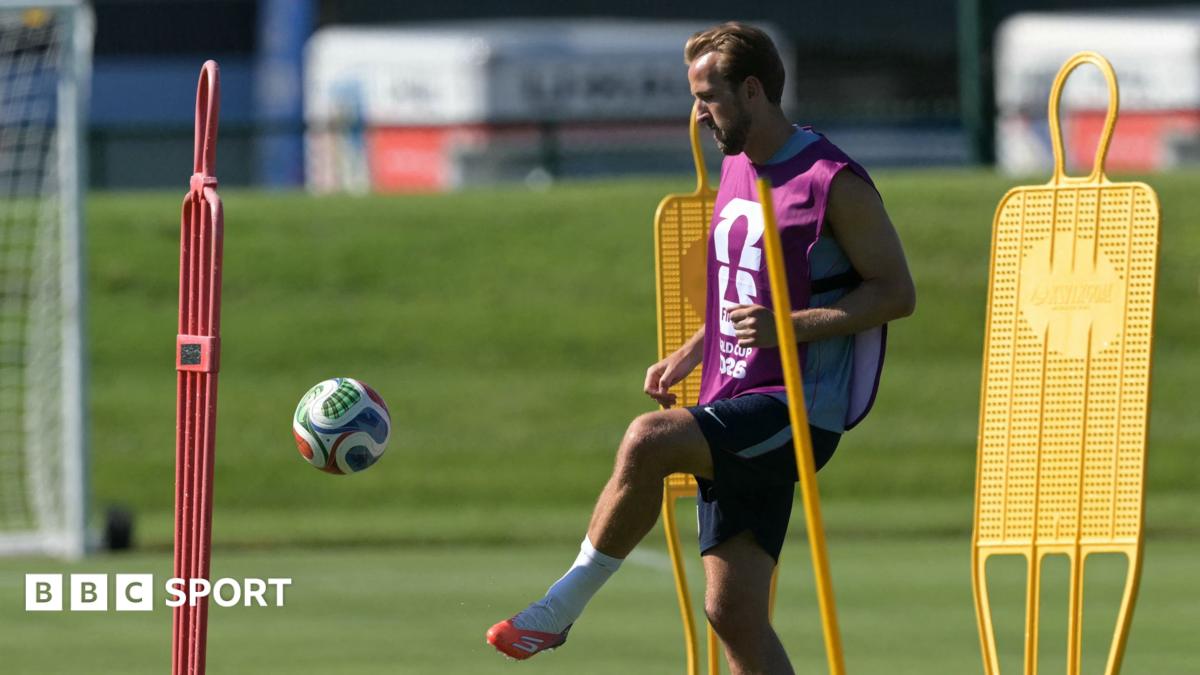
Harry Kane effectively replaced the striker in Munich, goaded by accusations he could never be considered a generational talent without a trophy - despite at times seemingly single-handedly lifting Tottenham Hotspur and England to within a fingertip of silverware.
Now 32, Kane has a Bundesliga title to accompany a feast of personal achievements, Golden Boots and goalscoring records - the fastest man this century to reach 100 (in 104 games) for one club in a top-five league.
The Three Lions captain recently hit 500 career goals, an astonishing achievement and one that might have seemed delusional to fans of Leyton Orient, Millwall, Norwich and Leicester, where Kane honed his early craft on loan.
Coupled with elite hold-up and playmaking prowess, Kane is redefining the centre-forward role.
"I came like a king, left like a legend," said Zlatan Ibrahimovic after scoring 38 goals in 31 Ligue 1 games during his final season at PSG.
The colossal Swede ended his career with a quota of quick-witted quips to match his bulging trophy cabinet - 12 league titles with five clubs, a Europa League at Manchester United and individual recognition in LA.
As silky-footed as he was silver-tongued (he'd argue that should be "golden-tongued"), Zlatan could mix it with battle-hardened centre-halves or score overhead kicks from 30 yards. As he told Pep Guardiola, he's a "Ferrari" not a "Fiat"...
Thierry Henry was equal parts elegant and clinical, effortlessly eating up turf, striding through defences like a sixth-former schooling year sevens, scoring worldies and va va vindicating his spot here.
Arsene Wenger's remodelling of Henry as a striker straddled the turn of the century and sparked a goal surge, scoring 18 times in the second half of his first season at Arsenal before adding a Euros to his World Cup with France.
Henry became record goalscorer for the Gunners and France - the national team mark since broken by Giroud and Kylian Mbappe - and clinched the Champions League his talent deserved at Barcelona in 2008.
Didier Drogba possessed a different aura. A formidable presence, a defender's nightmare - too tight and he'll turn you, drop off and he'll bury one from distance, try to tangle and he'll cause you all kinds of chaos.
The Ivorian's career was initially a slow burner - he joined Chelsea at 26 - and not as prolific as many on this list.
But he was as important to Jose Mourinho's revolution as Frank Lampard or John Terry, the focal point in a 4-3-3 that set a template for the rest of English football, a prototype modern centre-forward capable of leading the line on his own.
The Ronaldo, Rooney, R9 debate...
Many will disagree. While CR7 is undoubtedly one of the best goalscorers the game has seen, he didn't begin regularly playing as a centre-forward until his 30s - two of the four seasons Ronaldo started over 25 league games there came after joining Al-Nassr.
Likewise, Ronaldo's former Manchester United team-mate Wayne Rooney is almost too versatile for his own good when it comes to this particular list.
Instead, Karim Benzema, the man who often facilitated Ronaldo's ruthlessness at Real Madrid is in. Skilful, clinical, selfless, Benzema's Bernabeu existence was to help others flourish. He scored over 30 goals in four of five seasons after Ronaldo left for Juventus, winning the Ballon d'Or in 2022 and five Champions Leagues in total.
The former Lyon man boasts over 600 goal contributions, which Transfermarkt says is the most of any Frenchman to play in Europe's top five leagues.
Mbappe is second and, at only 27, will no doubt surpass his compatriot while also earning legendary centre-forward status in Madrid - though on the grandest stage, his World Cup heroics came largely off the left.
So we'll finish where we started: R9. The redemption story.
Ronaldo's brilliance is epitomised by four weeks in Japan and South Korea in 2002. Missing the entire 2000-01 season, his audition effectively boiled down to four games with Inter at the end of the next, scoring four times.
He transformed a Brazil side who squeaked through qualifying into world beaters.
Six games, eight goals. The haircut, the silver-and-lime Mercurial Vapors, a poacher with a toe-poke. Hustling defenders, bewildering goalkeepers. A World Cup final double. The Golden Boot.
There was more magic with Real Madrid's Galacticos, where he scored more than 100 goals - that sublime hat-trick and standing ovation at Old Trafford, a second Ballon d'Or. But the summer of 2002 defines Ronaldo. A phenomenon.