 5 months ago
107
5 months ago
107

Jeff KassoufApr 8, 2026, 08:01 AM ET
- Jeff Kassouf covers women's soccer for ESPN, focusing on the USWNT and NWSL. In 2009, he founded The Equalizer, a women's soccer news outlet, and he previously won a Sports Emmy at NBC Sports and Olympics.
The U.S. women's national team is about to embark on a rare journey of playing the same team three times in a week -- and it's Japan, the fifth-ranked team in the world.
The 2027 Women's World Cup is just over a year away, and USWNT head coach Emma Hayes has begun to narrow down her roster, refining both the team's tactical ideas and the personnel she thinks can best execute them. Still, she has plenty of questions that still need answering -- and less time than it may seem to do it.
Forward Sophia Wilson is due to play for the United States for the first time in 17 months after her maternity leave, and defender Tierna Davidson is back with the team for the first time in over a year after tearing an ACL. Those two returns alone are major headlines, and they each further complicate important positional decisions.
The USWNT will have just six international windows before the World Cup once these friendlies against Japan are over, meaning Hayes can't let any USWNT matches go to waste. Here are the burning questions for Hayes in this crucial international window, with the USWNT's first of three meetings with Japan on Saturday.
• USWNT transfer grades: Analyzing every American move
• Predicting the USWNT's starting XI for the 2027 World Cup
• The world's 21 best women's players, aged 21 and younger
Is the USWNT's versatility of strikers a strength -- or a vulnerability to be dealt with?
Wilson's highly anticipated return comes with Catarina Macario sidelined by a lingering heel injury, meaning the two players yet again won't be in camp together. That is an important note because they are the two obvious starters for the No. 9 role -- and they play it in entirely different ways.
Macario had held down the No. 9 role in Wilson's absence and hit her groove in late 2024, ending the year with a strong showing in a pair of wins over Italy. Macario plays the position as a false 9 who wants to drop deep and combine. Wilson can both stretch the line and drift wide to beat defenders one-on-one. She is a constant threat behind.
Come the World Cup, Hayes has to decide how she wants to play against a given team to choose who will occupy that role. And in this camp against Japan, she's going to see who can carry that load beyond Wilson (who will be on restricted minutes) and Macario.
Ally Sentnor stepped up in that role in the SheBelieves Cup, and the versatile Jaedyn Shaw could get another look up top. Jameese Joseph is likely to get time there as well in what will be her biggest test yet as a pro. Is the 23-year-old Joseph ready for the moment?
Who should be the USWNT's starting pair at center back?
Davidson will be on restricted minutes in this camp as she works her way back to full fitness, but her return should, at some point, reunite her with Naomi Girma for the preferred center-back partnership of the 2024 Olympic gold medal run.
As we said in last month's World Cup lineup predictions, a healthy Davidson would likely be the preferred partner to Girma at the 2027 World Cup. These upcoming matches against Japan are the first opportunities to test that theory again, even if only briefly. Davidson's left-footed, cerebral play offers something unique among the pool of defenders.
Emily Sonnett remains a steady option and potential starter, but Emily Sams and Kennedy Wesley are each off to hot starts this NWSL season.
Wesley is the most intriguing up-and-coming option outside of the injured Jordyn Bugg. There are Girma-like qualities to Wesley that extend beyond the San Diego Wave jersey to her ball-reading and play-setting abilities. Wesley's experience is still limited at the international level with just four caps, but she is bound to get an extended audition in one of these games and hopefully move her name up the depth chart.
Which USWNT player combinations will be solidified?
Hayes alluded to the idea that she will roll out one lineup in two of the games against Japan, and a second, distinct lineup in the other. She will likely alternate them too, similar to how she handled the SheBelieves Cup.
These are not necessarily A- and B-teams, but we can infer that the stronger, more experienced group is most likely to feature more favored starters. Roughly speaking, that was the XI that played Canada in March at the SheBelieves Cup, although the additions of Wilson and Davidson could change that.
What's important, Hayes has said, is the combinations within those lineups. That could be as simple as a midfield trio, but it is also about developing patterns of play between, say, a fullback, central midfielder and winger who have been asked to combine more down a given flank.
1:32
Why 'dream team' OL Lyonnes the right place for Lily Yohannes
Lianne Sanderson talks about Lily Yohannes' development alongside USWNT teammate Lindsey Heaps at OL Lyonnes after being named ESPN's 8th best U21 player.
How will Hayes choose to split up her midfield options? The combination of Sam Coffey, Claire Hutton and Rose Lavelle started against both Canada and Colombia in March for the third and fourth times in the past year. That appears to be Hayes' preferred trio when she needs more cover in midfield, as the USWNT surely will against Japan.
How would a combination of Coffey, Lindsey Heaps and Lily Yohannes fair against Japan? And where would Shaw, listed as a midfielder for this camp (but also a No. 9 option) fit into this?
Will Hayes show all her cards with the World Cup next year?
Three games against Japan is a difficult proposition for Hayes considering the matchup could be a knockout round game at next year's World Cup. That proposition is likely too hypothetical -- and the World Cup too far away -- for Hayes to hold back too many tactics, but there could be some gamesmanship in two world powers meeting at this stage of the cycle.
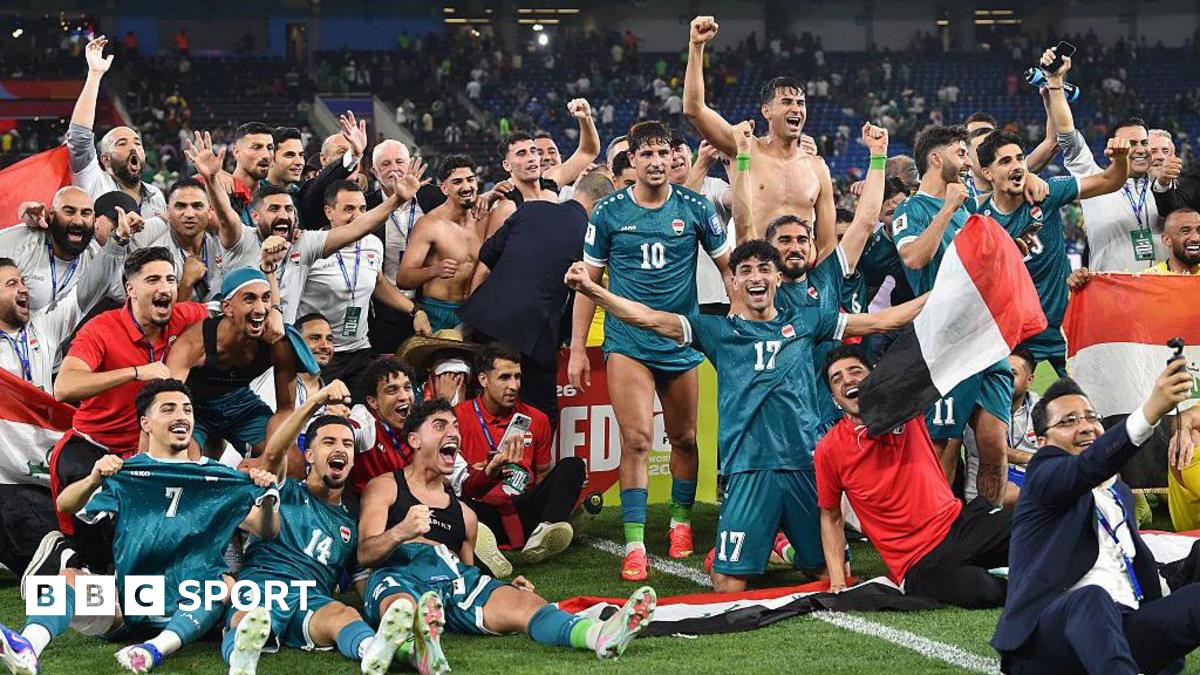
Japan also enters this window in a precarious place. The Nadeshiko just won the AFC Asian Cup last month, but the federation announced last week that it was moving on from head coach Nils Nielsen after his contract expired in search of more creative playing styles (or more passion -- it's not entirely clear).
That leaves Japan with Michihisa Kano as interim coach. Hayes will certainly be focused on seeing progress from her own side, but the whole point of playing such a high quality opponent is to stack up against that team's strengths and find solutions that can be applied come next year's World Cup. Japan being in this state of flux will complicate that analysis for Hayes and her staff, to some degree.
The limitations of returning stars and absences of others, like Macario, mean that Hayes can't try everything right now, anyway. But there are only a handful of international windows left before the World Cup, and there won't be many better tests than Japan can offer (especially with the challenges of scheduling European teams).
As has been the case for other coaches in previous World Cup cycles, there can be more knowledge to gain in defeat -- to see what works and who can or can't handle the moment -- in these types of big matchups before a World Cup.