 2 months ago
32
2 months ago
32

Tor-Kristian KarlsenDec 3, 2025, 03:52 AM ET
The 2026 World Cup draw is happening on Friday, and we already know 42 of the 48 teams involved in next summer's tournament in the United States, Mexico and Canada. The final six teams will be decided in the coming months, but what do you know about those who have already confirmed their place?
Here, we look at one thing that defines the way each team plays -- whether it's tactical, statistical or just plain interesting.
- 2026 World Cup: Match schedule plan revealed for day after draw
- 2026 World Cup draw: When does it start? How does it work?
- 2026 World Cup: Who has qualified, and how the rest can make it
HOSTS

CANADA (4-4-2): "The Maplepress revolution." Ten games into the Jesse Marsch era and Canada already have a tactical trademark -- albeit niche -- named "Maplepressing." In a tight, aggressive 4-4-2 (or 4-2-2-2), Canada defend on the front foot with a high line, minimal spacing between the units and a high pressing unit that stays narrow to shut down central passing options. The idea is arguably simpler than is sounds: to force opponents wide, trap them on the touchline and regain the ball early. Even with top talent like Jonathan David in attacking roles, Marsch has built the hosts on intensity, discipline and a clear pressing ID.

MEXICO (4-2-3-1/4-3-3): "The double No. 9 problem." The hosts face 2026 with unresolved issues. While the general idea might be in place, the results aren't. Since beating the U.S. in the 2025 Gold Cup final, they've failed to win a single game, even as Javier Aguirre doubled down on a possession-first, "defend with the ball" model. The most discussed dilemma to address, however, is how to pair strikers Raúl Jiménez and Santi Giménez without unbalancing the team structure -- Aguirre has used both together in a 4-4-2 in the past, but that doesn't appear to be his preferred system.

UNITED STATES (3-4-3/4-2-3-1): "Stick or twist?" Mauricio Pochettino's biggest challenge -- or advantage -- is choosing between two credible formations. While the USMNT primarily operates in a 4-2-3-1 that becomes a 3-2-5 in possession, built around Christian Pulisic drifting inside as the main creator, a 3-4-3 remains a fully viable alternative when Pochettino wants more control in buildup or additional threat from the wingers. The trade-off fluctuates between extra flexibility vs. continuity. Recent results suggest the balancing act works -- the USMNT is unbeaten in five against 2026-bound teams (plus-8 goal difference) -- but the final tournament shape is still up for debate; stay with one scheme or embrace the flexibility?
1:18
Pochettino 'positive' about USMNT's journey leading to the World Cup
Mauricio Pochettino talks about his work's progress at USMNT and looks ahead to the 2026 World Cup as they now prepare to face Marcelo Bielsa's Uruguay.
EUROPE (UEFA)

AUSTRIA (4-2-3-1): "Europe's relentless pressing machine." Ralf Rangnick has shaped Austria into a full-throttle Red Bull national team, built on aggression, directness and suffocating pressure. No European side pressed with more intensity in World Cup qualifying as Austria registered the continent's highest number of tackles (144), second highest recoveries (365), and lowest Passes Per Defensive Action (PPDA) of 7.14, edging even England and Germany. Rangnick favors front-foot pressure and immediate transitions; they don't just defend high, they force turnovers and once the ball is won, it's a matter of one or two passes before a chance is created. Few teams at this World Cup will bring more pure intensity.

BELGIUM (4-3-3): "When Belgium attack, they dribble." Though finally free of the "Golden Generation" label, Belgium are still one of the most dynamic teams in the world. No side attacked the opposition box more in UEFA qualifying -- 491 touches, 101 clear of Croatia in second -- or attempted more take-ons (201), a direct reflection of their world-class wide talent. Under Rudi Garcia they feature stretches of intense pressing, quick regaining of the ball and longer spells of possession, but the general idea is designed to open lanes for Jérémy Doku and Kevin De Bruyne to run at the defense.
CROATIA (4-2-3-1): "Control through measured, quality possession." Croatia cruised through qualifying, dropping just two points, but Zlatko Dalic's approach bucks the trend of Europe's mid-tier/top sides. Rather than pressing to maximum lung capacity, they dominate the ball -- a 69.7% possession share places them fifth, just behind Spain -- and build patiently through a veteran midfield. Croatia also ranked among Europe's leaders in key passes (124) and crosses attempted (241), yet their methodical tempo has drawn domestic criticism, with some dubbing them "the new Greece" [after the pragmatic win at Euro 2004.]

ENGLAND (4-2-3-1/4-1-4-1): "The unexpected kings of possession." England have quietly become Europe's most ball-dominant national team. Under Thomas Tuchel they averaged a remarkable 73.9% possession in qualifying -- the highest in UEFA, ahead of Germany with 72.7% -- a transformation that would have sounded implausible a few years ago. The shift is by no means cosmetic, though, as long periods of controlled circulation have doubled as a defensive weapon, helping England win all eight qualifiers without conceding a goal. While at times it does lead to labored sequences against low blocks, Tuchel's clear message is that he wants England to impose the rhythm, not react to it.
1:33
ESPN FC crew not having England as second favourites to win World Cup
Frank Leboeuf and Craig Burley question England's place as second favourites in the bookmakers' odds to win the 2026 World Cup.
FRANCE (4-2-3-1): "Defense first." Thirteen years into the Didier Deschamps era, France remain exactly what they've always been: utterly disciplined, compact and brutally hard to break down. The qualifiers backed up that narrative once again. No team in Europe allowed fewer shots -- just 23 in six games, an absurdly low 3.83 per 90 -- with England a distant second at 4.25. The shape may read 4-2-3-1, but their priorities rarely change. There's a double pivot in midfield shielding the back line, wide players working both ways and enough on-ball control to keep games in Deschamps' preferred rhythm. Predictable? Maybe. Effective? Absolutely.

GERMANY (4-1-3-2/4-2-3-1): "Press high, let the No. 10s create." Julian Nagelsmann has restored structure to Germany, straightening up distances and clarifying roles, but the team's real breakthrough lies in the double No. 10 pairing of Florian Wirtz and Jamal Musiala. Their input and reception/passing between the lines are the catalyst of Germany's fluidity, freeing full backs and reducing reliance on a prolific No. 9 striker up front. With 72.7% possession in qualifying, they prefer to take charge of games centrally, while they're one of Europe's most intense pressing sides off the ball (7.50 PPDA).
NETHERLANDS (4-2-3-1/4-3-3): "Pragmatism before ideology." Ronald Koeman has steered Netherlands away from doctrinal football towards a more adjustable model, switching between a 4-3-3, 4-2-3-1 and occasionally a back three without losing any attacking punch. The Oranje defend primarily in a mid-block and build asymmetrically, with full back Denzel Dumfries supplying much of the width. Despite the pragmatism, there's still a style to their play as they rank among Europe's best for progressive passes (724, second behind England) and attacking take-ons from the wingers.
NORWAY (4-2-3-1): "Ruthless in the final third." Norway topped the UEFA qualifying stats for goals scored (37) and assists (29), while they were second with Expected Goals (xG) of 24.70, much thanks to Erling Haaland's finishing but also due to a far more sophisticated style under Ståle Solbakken. Traditionally mocked as a direct side, they played just 6.6% of long balls (eighth among UEFA teams), instead basing their game on a coordinated buildup, wide/inverted winger take-ons and early combinations into the box.
1:07
Keller: No one will want to face Norway at the World Cup
Kasey Keller warns the top teams against underestimating Norway after they booked their place at the 2026 World Cup.
PORTUGAL (4-2-3-1/4-3-3): "Midfield balance is the missing link." While Roberto Martínez has kept Portugal's possession-heavy approach -- their 71.0% share in qualifying ranked third in Europe -- he's added a more assertive high press against stronger opponents. However, the unresolved issue is midfield balance. Martínez often fields five natural attackers, supported by playmaking rather than ball-winning midfielders, which can expose the back line when possession breaks down. Adding one or two midfield grafters in the centre might be needed if Portugal's game is to hold up against world-class opposition.

SCOTLAND (4-2-3-1): "The old heads." Europe's most senior side (at an average age of 28.8) enter the tournament with squad experience, though they haven't been in a World Cup since 1998. Steve Clarke's team defend deep (they were third among UEFA teams for shots blocked at 5.83 shots per 90), build width through the full backs and depend on midfield runners to get forward and provide chances. They don't see a lot of the ball (45.7% possession) but don't play it long that often either (12.2%), so set pieces could represent Scotland's primary attacking weapon.
SPAIN (4-3-3): "A modern makeover." While Luis de la Fuente's Spain still enjoy possession (70.1% from the qualifiers, behind England, Germany and Portugal), the days of pure "tiki-tika" are long gone. The European champions press higher and harder -- their PPDA of 9.76 ranks among Europe's most aggressive -- and possession now serves as a launchpad for quick attacks when openings appear, rather than wearing teams down with endless passing. Consequently, Spain's build-up is quicker, their wingers are extremely direct, and combinations unfold at a sharper tempo than in the previous era. They have by no means abandoned technique, but they've traded patience for incision, becoming far more direct in how they break down opponents.

SWITZERLAND (4-2-3-1/5-4-1): "Stability starts in midfield." Switzerland's strength lies less in standout metrics than in the reliability of their core with the midfield double pivot of Granit Xhaka and Remo Freuler essential for defensive balance and in denying the opposition space. Boss Murat Yakin may alternate between a back four and a situational back three, but the midfield pair give the Swiss their trademark order with fluid distribution, well-timed pressure and a defensive line that's difficult to pass through (they were seventh among UEFA teams for recoveries per 90, with 43). Switzerland rarely dominate and there's little flashness to them, yet their discipline and midfield control make them an awkward opponent for anyone.
SOUTH AMERICA (CONMEBOL)
2:33
Do Vinicius Jr & Rodrygo play with more freedom for Brazil?
The ESPN FC crew debate if Vinicius Jr & Rodrygo play with more freedom for Brazil than Real Madrid.

ARGENTINA (4-3-3): "The same plan, just older." Lionel Scaloni hasn't deviated much from the tactical concept that delivered the 2022 World Cup trophy, sticking largely with both the personnel and the principles that made the "Escaloneta" so formidable. Argentina will be one of the oldest sides in the tournament -- 29.3 average age -- but the formula still works. The keys are a CONMEBOL qualification-leading 64.0% possession, then compact mid-block out of possession (9.34 PPDA), quick vertical balls after regaining the ball, and an attacking shape made on familiar patterns with room for individual brilliance (they scored the most goals, with 31). At 38 years old, Lionel Messi's usage is lower, so the system carries more of the load and the collective remains balanced, disciplined and brutally efficient.

BRAZIL (4-3-3/4-2-3-1): "A work in progress...?" Brazil reached the 2026 World Cup after their worst CONMEBOL qualifying run of the modern era and boss Carlo Ancelotti is still searching for answers. The talent up front remains incredible -- Brazil often field four forwards, three of which are usually elite dribblers (Brazil recorded 365 take-ons in the qualifiers) -- but full back issues, spacing problems and a lack of domination have forced Ancelotti toward a more compact 4-3-3/4-2-3-1 with a clearer defensive structure. This is a Brazil side trying to impose order on chaos, even though Ancelotti freely admits they're still far from the fluid, mid-block team he imagines.

COLOMBIA (4-3-3): "South America's shot machine." Under Néstor Lorenzo, Colombia have become CONMEBOL's most assertive attacking outfit. Their 4-3-3 formation blends organization with flair, but the numbers point to incision too. They attempted more shots (247) and hit more crosses (300) than any other South American side in qualifying. Luis Díaz drives inside from the left, James Rodríguez floats into pockets as the creative hub, whereas full back Daniel Muñoz provides relentless width on the right. Colombia overwhelm their opponents through pressure and repeat patterns to get into dangerous spaces.

ECUADOR (4-2-3-1/5-4-1): "Beccacece's wall." Ecuador boast one of the most imposing defensive records in the world. Under Sebastián Beccacece they conceded just five goals in all of CONMEBOL's 18-game qualifying, a remarkable return given the quality of opposition, regardless of whether they lined up in a back three or four. The flipside, however, is that they're unlikely to entertain any neutrals, as a third of their qualifiers ended 0-0. The identity is clear, though: rigid organization, collective pressing and a strong physical imprint, all complemented by rapid counter attacks rather than long spells on the ball.
0:27
Paraguay fans take the streets in celebration after World Cup qualification
Paraguay fans flood the streets of the capital Asuncion after they qualified for their first FIFA World Cup in 20 years.
PARAGUAY (4-2-3-1): "The return of old school Paraguay." Gustavo Alfaro has rebuilt Paraguay by reverting to the strengths that have historically defined La Albirroja; structure, toughness and ruthless attention to (defensive) detail. His 4-2-3-1 is drilled around cutting off space, compact lines and winning duels, which helps explain why Paraguay produced the most clearances (403) and aerial duels (619) in CONMEBOL qualifying and conceded only 10 goals, the joint second-best record. Creativity is still limited -- just 14 goals scored -- but Alfaro's side are once again competitive, mentally prepared and exceptionally pragmatic.
URUGUAY (4-2-3-1/4-3-3): "Bielsa, but with restraint." With Marcelo Bielsa in charge, Uruguay were always going to be direct going forward, man-to-man marking oriented defensively and immediately drive forward the moment the ball is won. Furthermore, Uruguay blocked the most shots (69) and recorded the highest volume of recoveries (839) in CONMEBOL qualifying. As much as Bielsa's sides can be chaotic at both ends, this version is surprisingly more measured -- 22-12 goal difference over 18 qualifiers is very un-Bielsa like -- yet the energetic, relentlessly competitive edge is still present.
CENTRAL AMERICA (CONCACAF)


CURACAO (4-3-3): "Caribbean Total Football." Curaçao might be the most "European" team in CONCACAF. With a squad built around players trained in the Netherlands, coach Dick Advocaat runs a neat 4-3-3 formation, while they put in a third-best 165 tackles, and a PPDA of 9.55 is one of the more assertive pressing numbers in the region. They also finished the entire CONCACAF qualifying cycle as aggregate top scorers across all three stages (28), powered by the Bacuna brothers (Leandro and Juninho) in midfield and two attack-minded full backs. Despite that offensive profile, Curaçao kept six clean sheets in 10 qualifiers. Against elite opposition, though, expect them to sit deep, invite pressure, then explode forward with pace.

HAITI (4-2-3-1): "A remarkable rebound." Haiti's squad lean heavily on a wide diaspora, but their on-pitch appearance is now clearer as a result of a turbulent qualifying run. Following a 5-1 collapse to Curaçao, Sebastian Migné tightened the formation, choosing a deeper, more compact defensive setup while keeping the option to set off short, explosive pressing waves. They may sit deeper against stronger sides -- and they managed a CONCACAF-high 436 recoveries -- but their backbone remains strong with disciplined box defenders, a hardworking midfield core and a frontline built for sudden attacking bursts.

PANAMA (5-4-1/4-4-2): "Made in Barcelona." Under former Barcelona forward Thomas Christiansen, Panama have evolved into one of CONCACAF's tidiest sides in possession and were second in the qualifying field (61.5%), a number that reflects Christiansen's emphasis on patient, progressive build-up and using the ball as their main tactical idea. Despite the Barcelona-schooling, the former Leeds United manager is no 4-3-3 fundamentalist as he started leaning towards deploying three center backs towards the end of the qualifying campaign.
AFRICA (CAF)
1:11
Thabo Moloisane says Bafana have a winning mentality now
Heading into AFCON, on the back of qualifying for the 2026 FIFA World Cup, South Africa have developed a winning instinct that was lacking before, says defender Thabo Moloisane.
ALGERIA (4-2-3-1): "A team that wakes up after 45 minutes." Algeria eased their way to the 2026 World Cup with eight wins from 10 and Mohamed Amoura scoring 10 goals, but their Swiss coach Vladimir Petkovic still hasn't convinced everyone. His side posted 63.6% possession, the second-highest in African qualifying, yet often looked stagnant in build-up and vulnerable once the ball turned over, which is a strange contrast for a team packed with attacking flair and individual creativity. Petkovic's long tinkering phase didn't help clarity either. Still, Algeria's ability to change gears after halftime, press high and force opportunistic mistakes represent a defining weapon.

CAPE VERDE (4-3-3): "A late bloomer you shouldn't underestimate." Cape Verde enter their first World Cup with what is projected to be the tournament's oldest squad, averaging 30.7 years of age through qualifying. That experience defines their identity as much as their football. Pedro Leitao's side conceded just eight goals, based on strong organization and a calmness going into vital games. They operate from a compact 4-3-3, absorb pressure willingly and counter with precision through a sharp, pacy, front line which is happy to take opponents on. Their maturity, structure and game management make them unusually tricky for an easily underestimated debutant.
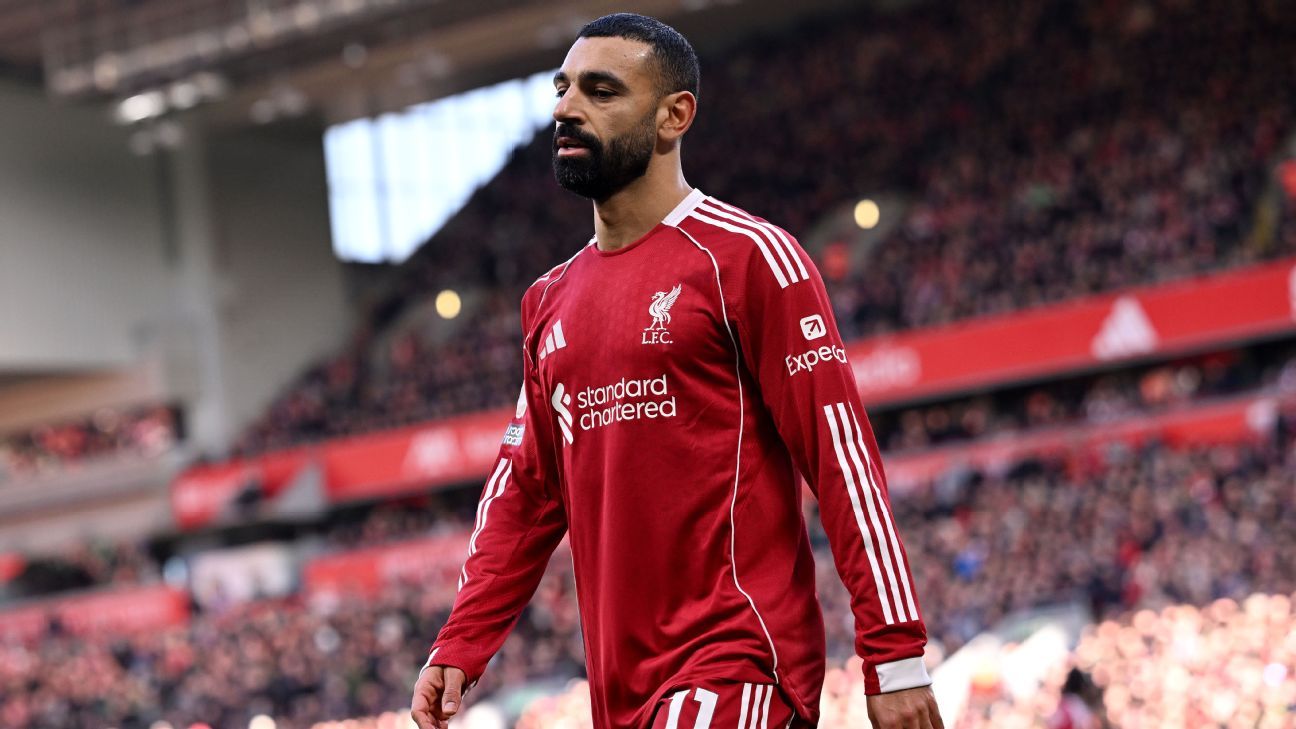
EGYPT (4-3-3/4-2-3-1): "Salah's goals are paramount." Egypt walked through qualifying unbeaten, conceding just two goals in 10 games, a true testimony of Hossam Hassan's shift toward risk-management. They control games through conservative organization first, which in turn makes Mohamed Salah's form the central variable heading into 2026. Egypt have the defensive base to frustrate anyone, but their attacking output remains modest (they "underscored" their xG by 2.4 in the qualifiers, but topped for key passes) and heavily rely to Salah's ability to turn tight matches with moments of quality.

GHANA (4-2-3-1/4-3-3): "Ayew dependency up front." Though ranked lowest in the FIFA ranking (72nd), Ghana are a functioning, pragmatic side under Otto Addo. The main outlets for goals, however, comes from a heavy dependency on 34-year-old striker Jordan Ayew (14 goals+assists from the qualifiers), which means that Addo needs to get more out of creative talents such as Mohammed Kudus and Kamaldeen Sulemana. Though Ghana's proficiency from set-pieces does somewhat ease the burden on their seasoned captain.

IVORY COAST (4-3-3/4-2-3-1): "Structure and spine." Boasting a 25-0 goal difference across qualification and with a structure built on a powerful spine rather than any single talisman, the Ivory Coast are a tricky proposition for any opponent. Under Emerse Faé they feature a disciplined 4-3-3 that can look like a 4-2-3-1 away from home, controlling long stretches of possession. Their attacking impact comes from rapid full backs and interchangeable wide forwards, but the collective spirit is key. The center backs dominate the box and they rely on a hard-running midfield to provide balance. This is a more mature, consistent, tournament-ready Ivory Coast than seen in recent editions.
MOROCCO (4-3-3/4-1-4-1): "Hard to break down, but flair and creativity going forward." Walid Regragui's side won eight games from eight in qualifying and conceded just twice. They are constructed around a compact 4-3-3 that becomes 4-1-4-1 when the wingers drop, but this isn't only about control and defensive rigidity as Morocco also carry genuine attacking flair: Achraf Hakimi's overlaps, Azzedine Ounahi's press resistance, Brahim Díaz's creativity, and the end-product of Hakim Ziyech, Youssef En-Nesyri and Ayoub El Kaabi. If Morocco can be criticized for showing caution, their attacking talent can still get them out of trouble.

SENEGAL (4-3-3/4-2-3-1): "A serious contender?" Senegal is arguably Africa's most complete and aesthetically pleasing side, packed with talent from back to front who are comfortable dictating games. They recorded 64.8% possession -- the highest in CAF qualifying -- and make good use of that to patiently shift the opponent from side to side until openings appear. Pape Thiaw's team press aggressively and rely on an energetic midfield to suffocate transitions. With this mix of technique, organization and top-level individual quality, Senegal can potentially trouble whoever they come up against.

SOUTH AFRICA (4-2-3-1/4-3-3): "Sundowns DNA." South Africa lean heavily on a core of players from Mamelodi Sundowns -- the country's perennial champions -- which gives them a rare cohesion at international level. Hugo Broos has built a nearly organized, well-drilled side which allowed just 5.8 shots per 90 minutes in qualifying, one of the stingiest records across Africa.
TUNISIA (4-3-3/4-2-3-1): "Defensively excellent, but lacking firepower." Tunisia had one of the most remarkable qualifying campaigns anywhere, with 10 clean sheets from 10 matches, which was the joint-best defensive record in Africa (along with Ivory Coast). Coach Sami Trabelsi has undoubtably tightened things by switching from Tunisia's old back three to a more stable back four that keeps players behind the ball and rarely gives up space. However, the question is whether that defensive perfection will be enough as Tunisia lack any forwards who play regularly in one of Europe's top five leagues.
ASIA (AFC)
2:06
Lopetegui on Qatar's World Cup qualification: Best day of my career
Head coach Julen Lopetegui says he is "very proud" after Qatar qualified for the 2026 World Cup for the first time

AUSTRALIA (3-4-3): "Three center backs, big on efficiency." Australia are one of the few World Cup nations who feature a back three as a standard formation and the Tony Popovic version has proved remarkably efficient. While they're comfortable without the ball and rely on their three center backs to protect central spaces, the takeaway from qualifying was their output. Australia outperformed their xG by nearly +10 (28.5 vs. 38), which is quite remarkable in the absence of a high-scoring center forward. They were second for take-ons (281) in the Asian qualifiers, but while don't they create masses of chances (they were fifth), they often finish the ones they get and grind through games with discipline.

IRAN (4-2-3-1): "Create plenty, but could score more." Iran completed the second-most through balls in Asian qualifying (12), indicating that their midfield can unpick lines even if the overall approach by and large is reactive. Amir Ghalenoei's 4-2-3-1 tend to sit deep and counter, leaning on the penalty-box instincts of Mehdi Taremi and Sardar Azmoun up front, but chance creation can stall against set defenses. The creative numbers are promising (their xG of 18.99 was sixth in qualifying), yet converting that to tournament play -- where space is scarcer -- is Iran's challenge.

JAPAN (3-4-2-1): "Creation and efficiency through structure." Japan swept through qualifying with 51 goals (from an xG of 30.18), 188 chances created and 149 key passes, highlighting how intelligently they move the ball. Hajime Moriyasu's flexible concept is based on high pressing with sharp positional rotations in the final third, consistently crafting spare players between lines. Japan have also found an interesting edge from corners, with six converted in qualifying. The aggression of their back three can leave space if the wing backs push too high, placing real demands on the double pivot in midfield. But when things click, Japan generate chances at a rate no regional rival can match.

JORDAN (5-4-1/3-5-2): "Beware the transition." World Cup debutants Jordan made the finals with the lowest average possession of any Asian qualifier (46.7%), which appears very much by design. Houcine Ammouta and now Jamal Sellami have settled fully into a back-three defense that collapses into a 5-4-1, trusting wide center backs to win duels and trigger fast breaks. Their attack comes almost exclusively from vertical runs after regaining the ball and this style has produced one of the region's strongest shot-to-transition ratios. But if they are to be dangerous, Jordan need it to be a stretched game.

QATAR (4-2-3-1): "Defensive worries." While Julen Lopetegui has added more structure to Qatar's buildup, the headache of their campaign was their defensive troubles. They leaked 24 goals in the third qualifying stage, the worst of any of the 18 Asian nations. That defensive volatility contrasts sharply with their threat in transition, where the prolific Almoez Ali -- top scorer in qualification with 12 -- gives them a proper edge. Set pieces have also turned into a reliable source of chances, but unless Lopetegui sorts out the defense, the 2022 hosts will really struggle.

SAUDI ARABIA (4-3-3/4-2-3-1): "Energy in midfield, short up front." In his second spell as manager, Hervé Renard has improved the country's out-of-possession game, but the attack is still a weak spot. They scored only seven goals in the final qualifying group and the Frenchman is still looking for a compatible front line. To compensate, he has pushed the team towards a more direct style, placing more emphasis on the midfield runners as they produced the second-highest volume of touches in the opposition box (449) among Asia's qualifiers.
SOUTH KOREA (3-4-3/4-2-3-1): "Seeking variety beyond Son." South Korea raced through qualifying unbeaten and scoring freely, yet questions remain on how much of their attack still has to flow through the 33-year-old Son Heung-Min. Hong Myung-bo's midfield double pivot and restrained full backs give them territorial control (71.4% average possession, the highest from Asian qualifying) but chance creation often depends on individual interventions rather than collective patterns. His recent shift toward a back three -- wing backs higher; Son as a lone striker -- is one effort to broaden the threat. Despite preferring control and possession, they can "explode" on the final third with 1,324 progressive passes (the best in Asia).
UZBEKISTAN (3-4-3/3-5-2): "Cross early, cross often." Timur Kapadze's arrival mid-campaign -- now reinstated as assistant after the unexpected recent appointment of Italy legend Fabio Cannavaro as manager -- turned Uzbekistan into a more pronounced back-three side, giving them license to attack aggressively through their wing backs while trusting Manchester City defender Abdukodir Khusanov to rescue them in transition with his outstanding recovery pace. Their main source of attacking threat come from wide areas, though, as they produced 222 crosses and 160 shots in qualifying
OCEANIA (OFC)

NEW ZEALAND (4-3-3/4-5-1): "More needed from Wood." New Zealand's friendly form has been dodgy (no wins in seven, just one draw), but Darren Bazeley's main tactical challenge is getting 33-year-old Chris Wood involved in more than penalty-box finishes, especially since the Nottingham Forest striker has failed to take his Premier League form to international level (just three goals in the qualifying). As Oceania's opponents (such as Fiji and New Caledonia) were predictably no match for the Kiwis, they could rely on a flat 4-3-3 and a steady flow of crosses, but the 2026 World Cup will demand a more cohesive, unadventurous approach, most likely a 4-2-3-1 with Wood linking play earlier. Bazeley wants his captain to act as a reference in build-up rather than solely focusing on the end product.
The final six World Cup berths
2:53
Inside New Caledonia's World Cup dream
Mark Ogden speaks about his trip to Gibraltar to watch New Caledonia.
The remaining six teams will come from two routes: the UEFA playoffs (4) and the inter-confederation playoff (2).
UEFA playoffs:
1. Italy/Northern Ireland vs. Wales/Bosnia and Herzegovina
2. Ukraine/Sweden vs. Poland/Albania
3. Turkey/Romania vs. Slovakia/Kosovo
4. Denmark/North Macedonia vs. Czechia/Republic of Ireland
Inter-confederation playoff:
5. New Caledonia/Jamaica vs. DR Congo
6. Bolivia/Suriname vs. Iraq