 3 months ago
65
3 months ago
65
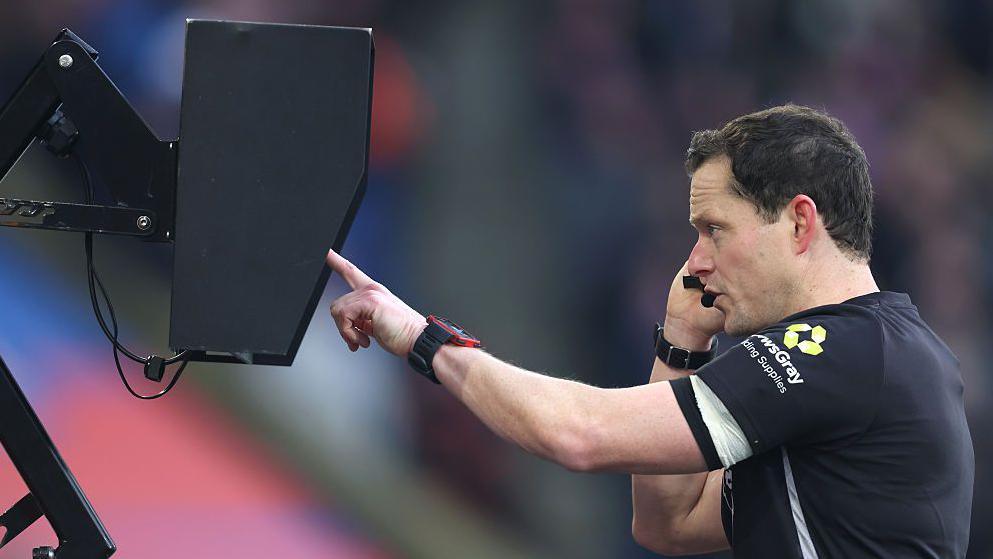 Image source, Getty Images
The Premier League is not expected to opt in to VARs being able to rule on incorrectly awarded corners
By
Football issues correspondent
Corners and second yellow cards will be added to the scope of the video assistant referee (VAR) for this summer's World Cup.
Measures to address loss of tempo in matches and cut down on time-wasting will also be introduced, including new countdowns on goal-kicks, throw-ins and substitutions.
The International Football Association Board (Ifab) approved the proposals at its annual general meeting at Hensol Castle in Wales on Saturday.
The changes will come into force from June 1 and apply for the 2026-27 season.
Ifab also agreed to further trials about potential changes to offside, and to consult about measures to combat players covering their mouth when confronting opponents during matches.
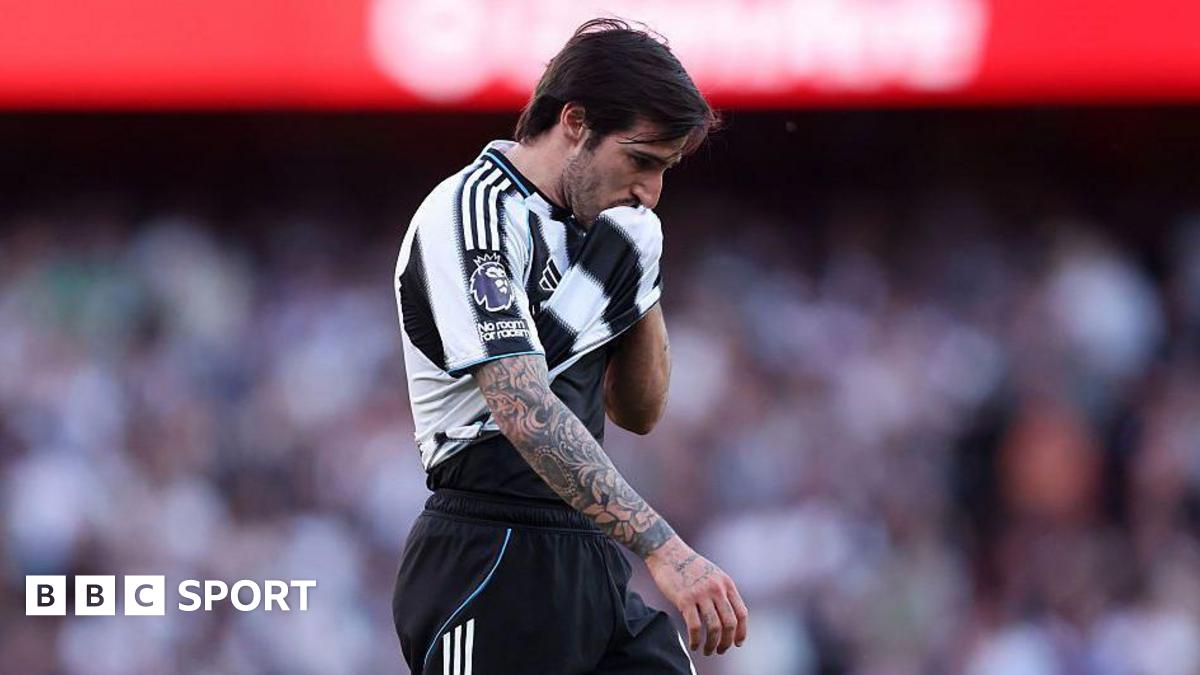
It comes after Benfica's Gianluca Prestianni was accused of racially abusing Real Madrid's Vinicius Jr while covering his mouth with his shirt.
The Argentine, who denies the allegation, was provisionally suspended by Uefa - European football's governing body.
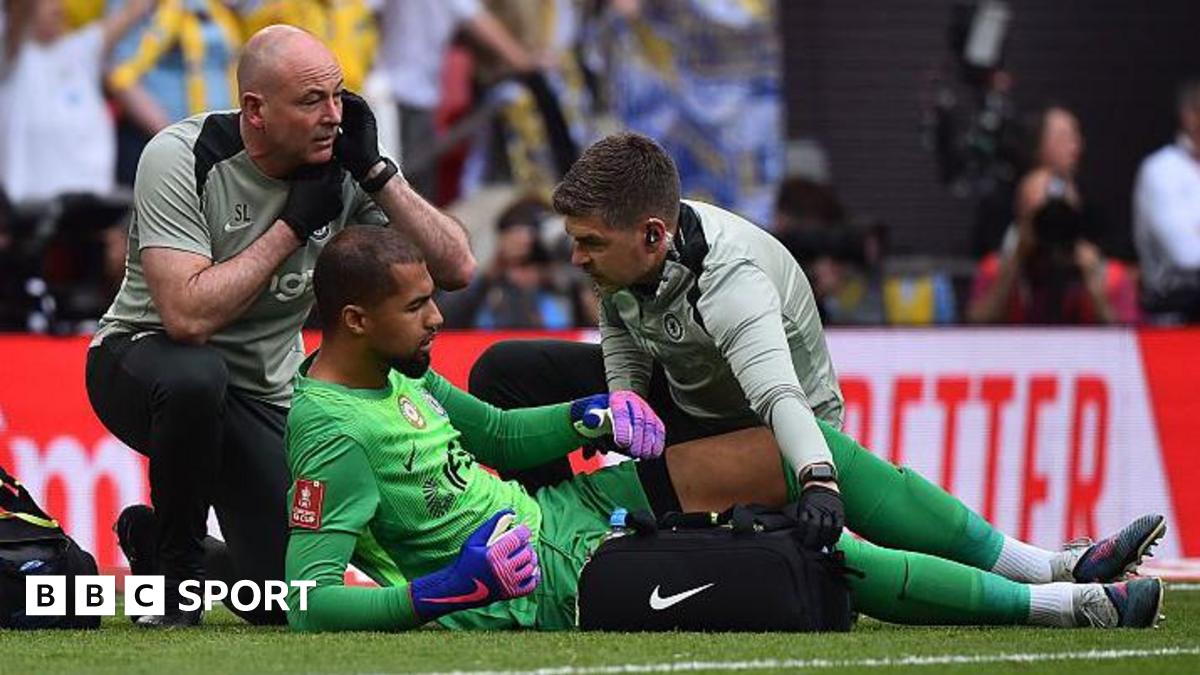
Ifab will also stage trials with a view to finding ways to stop 'tactical timeouts' prompted by goalkeepers having on-field treatment.
And former Arsenal manager Arsene Wenger's proposal for changing the offside law will finally be trialled in the Canadian Premier League when its new season begins in April.
More VAR - but leagues can opt out
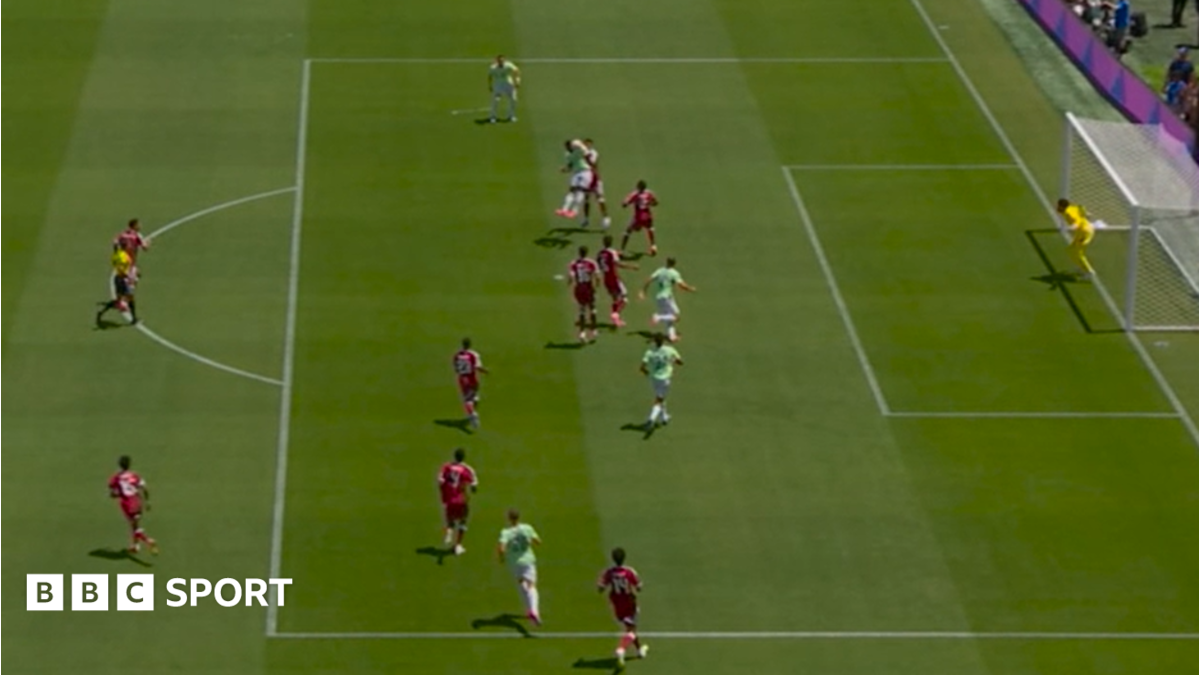
World governing body Fifa has strongly supported expanding the remit of VAR when it can quickly fix decisions that are clearly wrong.
However, many leagues had said measures that could increase delays would not be acceptable.
That was particularly the case for corners.
Fifa was adamant it wanted to review corners at the World Cup and argued strongly for it. Because leagues opposed it, it is something they can opt in to.
The Premier League is not expected to do so. Uefa is also believed to be against it, but Italy's Serie A is likely to adopt it.
There was more support for the idea VAR should look at incorrectly awarded second yellow cards.
In a notable incident earlier this month, Juventus defender Pierre Kalulu was sent off for a second booking after Inter Milan's Alessandro Bastoni went to ground under minimal contact.
Referee designator Gianluca Rocchi said he was "very sorry" for a decision that was "clearly wrong" and "VAR could not be used to rectify it".
In the past two seasons, the Premier League's Key Match Incidents Panel has found 17 players were wrongly sent off for two cautions. However, there have not been any logged this season.
The KMI Panel has found seven missed second yellows in 2025-26, though that aspect will not be added to VAR protocol. It is felt looking at potential second yellows would be too intrusive and would open up a review for every challenge by any player on a caution.
Ifab also approved the VAR being able to step in if a yellow card has clearly been given against the wrong team. If, for example, a player is booked for handball but the ball actually touched the arm of the opponent, this can be corrected.
Countdowns for goal-kicks, throw-ins and substitutions
 Image source, Getty Images
A rise in popularity of long throws has led to increased stoppages when the ball is out of play
A series of measures to tackle 'tempo disruption' and 'time lost' have also been approved.
Following the success of the eight-second time limit imposed on goalkeepers releasing the ball when it is in their hands, a countdown will now be applied to players taking goal-kicks and throw-ins.
If a player takes too long, possession will switch to the opposition, meaning a goal-kick could become a corner, or a throw would go to the opposition.
Two other items have been added to the laws after successful trials in Major League Soccer in recent seasons.
A substituted player must leave the field within 10 seconds, and if they fail to do so their replacement will not be immediately able to come on. Their team must play with one fewer player for at least 60 seconds and until the ball next goes out.
Players who go off injured will also have to stay off for an extended period - doubling the Premier League's 30-second regulation to one minute.
Fifa had trialled two minutes - also used in MLS - in the Arab Cup in December, but leagues had concerns about unintended consequences such as a player having to leave the field when injured and their team conceding a goal.
There will be exemptions, including when the opposition player has been booked or sent off, if a substitution is being made, or if the player is to take a penalty.
The law will not apply to goalkeepers, and no solution was agreed for the 'tactical timeout' that has been seen as a scourge of the modern game.
Ifab technical panels have discussed the issue at length, but there is no common ground on an effective solution.
A proposal to take an outfield player off was proposed but rejected. It was felt that could cause an injured goalkeeper not to seek treatment for fear of hampering their team.
Ifab decided trials should be conducted to further assess the issue and to propose options as a deterrent.
There has also been an amendment to the law around when players deny opponents an obvious goalscoring opportunity - known as 'Dogso'.
At present, a defender can only be sent off if the player fouled is through on goal, but that will now be expanded so it covers team-mates of the attacker.
The wording "location and number of attackers" has been added to the considerations.
This is expected to apply to teams who are, for instance, on a fast counter-attack. The fouled player may not have a scoring chance but if they could have passed to team-mate who would, that may be 'Dogso' next season.
A player who commits a 'Dogso' offence when advantage is played and a goal is scored will not now get a yellow card.
Elsewhere, the 'only the captain' guidelines covering who can talk to the referee, and the 'double touch' penalty clarification have also been added to the laws.
There has also been a modification to allow players to tape up jewellery if it cannot be removed from their body.
Wenger's offside idea to be trialled
It has taken six years, but Wenger's big idea to fix offside will finally be tried out.
Before Ifab's last meeting in January, it looked as though the proposal was about to be kicked into the long grass.
But the Canadian Premier League then put itself forward to trial it.
Wenger, who has been Fifa's head of global football development since 2019, proposes there should be a complete gap between the attacker and the second-to-last opposition player - effectively the last defender, given the goalkeeper's usual positioning.
Critics have suggested so-called 'daylight offside' would give too much advantage to the attacking team.
The results of the trial will be presented to Ifab at the end of year.
There is the potential for the law to change across the world for the 2027-28 European season.
However, it seems likely Ifab would seek more extensive trials, especially as the Canadian league does not have VAR.
VAR on corners 'a sensible solution'
ByDarren Cann
Former Premier League assistant referee
With Ifab ratifying the use of VAR to check the validity of corner kicks at the World Cup, other competitons may follow suit - provided the review can be completed immediately and without delaying the restart.
That rider is important as the flow of the game is so integral, and further delays would not be welcome.
In practice, corners can almost always be quickly checked before they are naturally taken - as we saw during the successful trial at the Arab Cup in December.
Having spent many hours sitting next to video assistant referees watching dozens of matches, I can say it is a slick, seamless process to quickly ascertain that the corner was correctly awarded by the on-field referee team (or otherwise).
Ifab and Fifa - understandably - want to avoid a situation where a wrongly awarded corner results in a goal being scored.
As 99% of corners can quietly be checked in the background with no delay to the match, it is a sensible solution and could potentially prevent a country from being knocked out of this summer's World Cup as a result of a wrongly awarded corner.